Concrete Driveways
Get a durable, properly installed concrete driveway that holds up to daily traffic, California weather, and years of use.
Why a Concrete Driveway Is Worth the Investment
Your driveway takes a beating every single day. Cars, trucks, weather, oil, and foot traffic all work against it over time. If yours is cracked, uneven, stained, or just worn out, you already know the difference a solid surface makes. A properly poured concrete driveway can last 30 years or more when it is built right from the start.
At Garden Grove Concrete Contractor, we handle every step of the process in-house. That means no subcontracting the prep work to someone else and no disconnect between the crew that digs and the crew that pours. We treat your driveway like it is the only job we have that day, because when we are on your property, it is.
Concrete is one of the best surface choices for driveways here in Garden Grove and throughout Orange County. It stands up to the summer heat without softening the way asphalt does, it drains well when graded correctly, and it does not need the kind of ongoing sealing and maintenance that other materials require. Visit our home page to learn more about all the concrete services we offer.
What Goes Into a Proper Driveway Installation
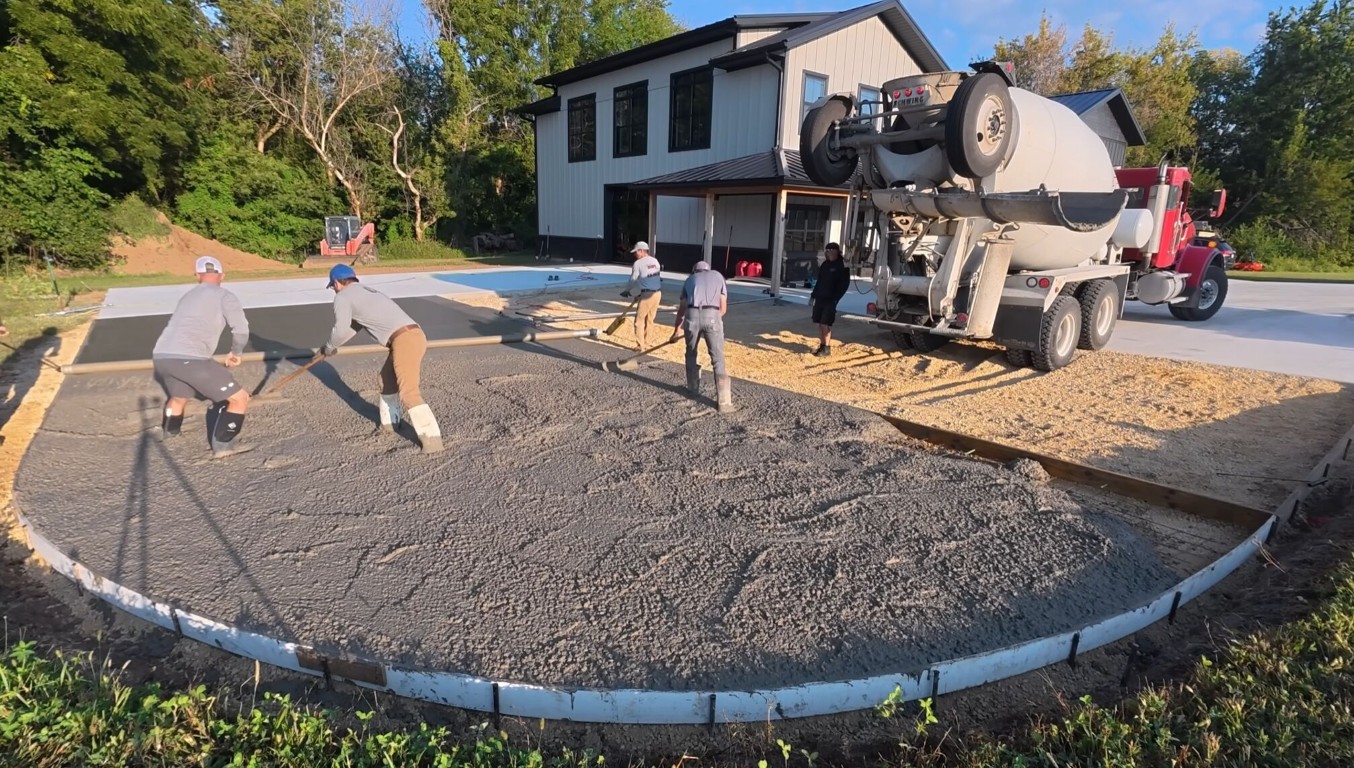
A concrete driveway is only as good as the work that happens before the concrete ever arrives. Here is how we approach each installation so you know exactly what to expect.
- Site evaluation and grade check. We look at the existing surface, drainage patterns, and slope before anything else. Water needs somewhere to go. If it pools on your driveway, the slab will fail faster no matter how good the concrete is.
- Old material removal. If you have an existing asphalt or concrete driveway, we break it out and haul it off. No leaving chunks buried beneath your new slab.
- Base preparation. We compact the subgrade and lay a properly graded gravel base. This is the most important step most contractors skip or rush. A solid base prevents settling and cracking down the road.
- Form setting and reinforcement. We set the forms to the correct dimensions and grade, then install rebar or wire mesh depending on the application. Reinforcement keeps the slab from cracking and shifting over time.
- Pour, finish, and cure. We use the right concrete mix for driveways, finish the surface to your preference (broom finish is the most popular for grip), and let it cure properly before opening it to traffic.
If you are also thinking about a new walkway or entry area, our team can handle both at the same time. Take a look at our sidewalks, walkways, and flatwork services to see how we can tie everything together.
What Affects the Cost of Your Driveway
Concrete driveway pricing varies based on several factors. Understanding them helps you set realistic expectations and compare quotes fairly. Here is what drives the cost on most jobs.
Size and shape. Larger driveways and irregular shapes require more materials and labor. A straightforward rectangular driveway is the most cost-efficient to pour. Curves, cutouts, or circular turnarounds add time.
Thickness. A standard residential driveway is typically 4 inches thick. If you park heavy vehicles or want extra durability, we may recommend 5 or 6 inches in high-traffic areas.
Demolition and haul-away. If there is an existing driveway to remove, that adds to the total. We include this in your quote upfront so there are no surprises.
Finish type. A basic broom finish is the most affordable. Exposed aggregate, stamped patterns, or colored concrete add cost but also add visual appeal. If you want to explore decorative options, we can walk you through what fits your budget.
We give you a written, itemized estimate before any work begins. No vague ranges, no bait-and-switch pricing. If the scope changes during the job, we talk to you first.
Serving Garden Grove and Surrounding Cities
We are based in Garden Grove and work throughout Orange County. We have poured driveways in Anaheim, Santa Ana, Westminster, Huntington Beach, Costa Mesa, and more. Working locally means we understand the soil conditions, permit requirements, and weather patterns specific to this area.
In Southern California, the soil can shift significantly between the wet season and dry months. We account for that when we design your base and choose your mix. A driveway that was installed correctly here should not show significant cracking in the first decade, let alone the first year.
We are also familiar with local permit requirements. Depending on your city and the scope of your project, a permit may be required before work begins. We can advise you on what is needed and help you navigate the process so your job is done legally and properly from start to finish.
If your project involves more than just the driveway, check out our concrete slab and foundation work page to see how we handle larger or more complex pours.
Common Questions About Concrete Driveways
How long does a concrete driveway take to cure before I can drive on it?+
Can you pour concrete over my existing asphalt driveway?+
Do concrete driveways crack over time, and can you prevent it?+
Ready to Get Your Driveway Done Right?
Call us today for a free, no-obligation quote. We will come out, take a look at your property, and give you a clear written estimate with no hidden fees.
(657) 722-4198