Retaining Walls & Concrete Masonry
Stop soil erosion, manage slope, and add usable space to your property with a properly engineered concrete retaining wall.
When Your Yard Needs More Than Just a Wall
A retaining wall is not just a visual element in your landscaping. It is a structural system that holds back tons of soil and manages water pressure from behind. When it is built right, it does its job quietly for decades. When it is built wrong, it shifts, bulges, and eventually fails, often at the worst possible time.
At Garden Grove Concrete Contractor, we build retaining walls and concrete masonry structures that are engineered to hold. We factor in soil type, slope grade, drainage, and load conditions before we ever set a block or pour a footing. That planning is what makes the difference between a wall that holds for 30 years and one that tips over in a rainy season.
Retaining walls are one of the more complex concrete and masonry services we offer. You can see our full range of work on our home page. If your project also involves a slab or foundation component, take a look at our concrete slab and foundation work page.
Types of Retaining Walls We Build
Not every retaining wall is built the same way. The right type depends on how much soil you are holding back, the height of the wall, your site conditions, and the look you want. Here is a breakdown of what we offer.
- Poured concrete retaining walls. The most structurally robust option for taller walls or walls holding back large volumes of soil. We form and pour these walls with reinforcing steel and, if needed, a concrete footing that ties into the ground. These walls handle significant load and are built to last decades with very little maintenance.
- Concrete masonry unit (CMU) block walls. CMU walls are built from concrete blocks set in courses with mortar and reinforced with rebar and grout fill. They are strong, cost-effective, and work well for mid-height retaining walls in both residential and commercial applications. Block walls can also be textured or finished to improve their appearance.
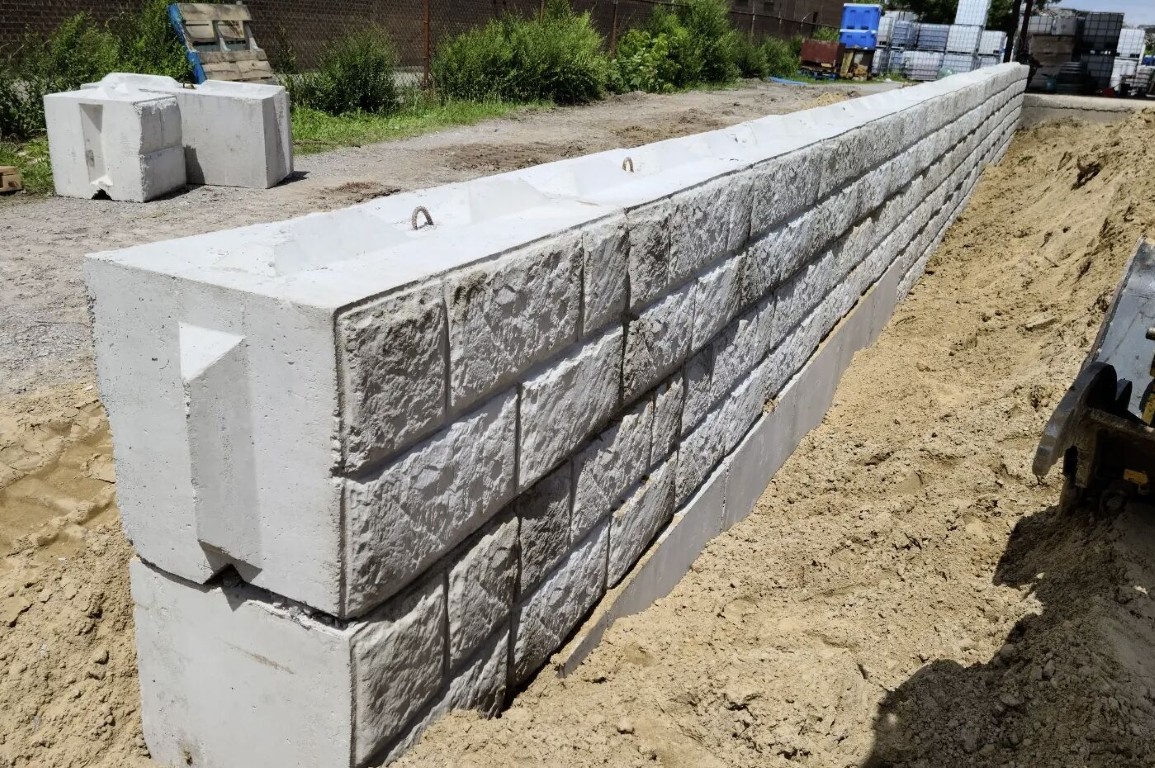
- Segmental retaining walls. These walls use interlocking concrete block units that are dry-stacked without mortar. They are a popular choice for residential gardens, yard leveling, and terracing. They look clean and natural, handle drainage well, and are well-suited for walls under 4 feet in height.
- Garden walls and decorative masonry. Not every wall is structural. Garden borders, low decorative walls, planter boxes, and outdoor seating walls are all part of what we build. These give your yard definition, visual interest, and useful outdoor structure without the full engineering requirements of a load-bearing wall.
What Goes Into a Well-Built Retaining Wall
The parts of a retaining wall you cannot see are usually the most important. Here is what we pay attention to on every job.
Drainage behind the wall. Water pressure is one of the most common reasons retaining walls fail. We install gravel backfill and perforated drainage pipe behind the wall to channel water away and keep hydrostatic pressure from building up against the structure. Weep holes are incorporated in solid walls to allow water to escape. Without proper drainage, even a well-built wall will eventually be pushed over by water.
A solid footing. Most retaining walls require a concrete footing that extends below the frost line and below the depth of any soil movement. In Southern California, frost depth is less of a concern, but getting below disturbed or soft soil still matters. We dig to stable ground before we set the footing.
Reinforcement for taller walls. Any wall over 4 feet tall typically requires structural reinforcement, and in many jurisdictions, a permit and engineering review. We work with you to understand the permit requirements for your project before work starts, and we build to those specifications.
If an existing wall on your property is cracking, leaning, or showing signs of distress, we can assess whether it needs repair or needs to come down and be rebuilt. See our concrete repair and replacement page for more on that process.
Retaining Wall Contractors Serving Garden Grove and Orange County
Retaining walls in Orange County deal with specific soil conditions that make drainage especially important. The clay-heavy soils common throughout Garden Grove, Anaheim, and the surrounding cities hold water longer than sandy soils do, which increases the lateral pressure on wall structures after a rain event. We design our walls with that in mind.
We are also familiar with Garden Grove's permit requirements for retaining walls. In most cities, a wall over a certain height, typically 3 to 4 feet in the retained soil, requires a building permit. We will let you know at the estimate stage whether your project will need one, and we can help you navigate the process.
Every retaining wall project we take on starts with a proper site assessment. We look at the slope, the soil type, the drainage conditions, the planned use of the retained area, and any nearby structures that could affect the load. We then give you a written proposal that clearly describes the scope, the materials, and the total cost.
Common Questions About Retaining Walls
Do I need a permit to build a retaining wall in Garden Grove?+
Why is my existing retaining wall leaning or cracking?+
How long does it take to build a retaining wall?+
Get a Free Quote on Your Retaining Wall Project
Call us and we will schedule a site visit. We will look at your slope, your soil, and your drainage before giving you a written quote with clear scope and pricing.
(657) 722-4198