Concrete Repair & Replacement
Fix cracked, sunken, or deteriorating concrete before small problems turn into costly structural damage.
When Should You Repair vs. Replace?
Not every damaged slab needs to come out. But not every crack can be patched and called done either. Knowing the difference can save you a lot of money, or save you from spending money on a repair that fails in two years and leaves you back at square one.
At Garden Grove Concrete Contractor, we give you an honest assessment before we ever start talking price. If a repair will hold up and give you another 10 to 15 years of use, we will tell you that. If the slab has moved too far, the base has eroded, or the damage is too widespread to patch effectively, we will tell you that too and explain exactly why replacement makes more sense.
We handle both options in-house here in Garden Grove. You can see the full list of what we offer on our home page. Whether it is a cracked driveway apron, a sunken walkway section, or a deteriorated patio slab, we have the tools and experience to get it back in shape.
Signs Your Concrete Needs Repair or Replacement
Concrete problems rarely appear overnight. They build up over time and give you signals along the way. Here is what to watch for.
- Cracks wider than a quarter inch. Hairline cracks in concrete are common and usually cosmetic. But when a crack is wide enough to fit a coin into it, water is getting in. In Southern California, even our mild winters are enough to expand that water and widen the crack further each season.
- Uneven or sunken sections. When one panel has dropped lower than the one next to it, the base underneath has shifted or eroded. That lip is a trip hazard and a sign of ongoing movement that will get worse over time.
- Spalling or flaking surface. When the top layer of concrete starts to chip, pop, or peel away, it is usually a sign that the original surface was not cured properly, was sealed too early, or has been exposed to too much moisture or chemical damage.
- Pooling water. Concrete should drain away from your home and not collect in low spots. If water is pooling after rain, the grade has shifted or the original slope was wrong. This puts pressure on the slab and can eventually undermine the base.
- Widespread cracking or multiple failed panels. At some point, the cost of patching each crack individually adds up faster than a full replacement. If you are dealing with damage across more than a third of the surface, replacement usually makes more financial sense long-term.
How We Approach Concrete Repair
There is no single fix for every concrete problem. The right approach depends on the type and extent of the damage, the age of the slab, and what is happening underneath it. Here is how we handle the most common repair situations.
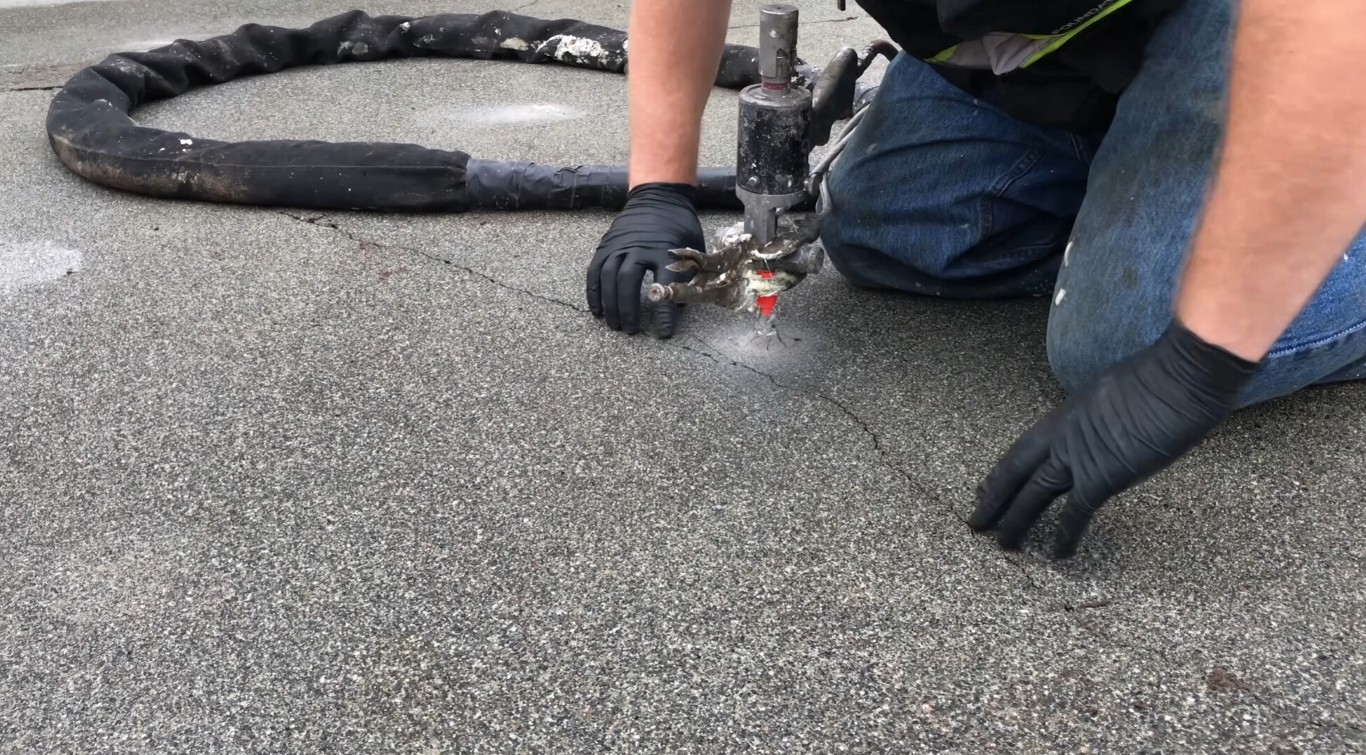
Crack routing and sealing. For isolated cracks that have not significantly shifted, we clean out the crack, widen it slightly with a router to create clean edges, and fill it with a flexible polyurethane or epoxy sealant. This stops water infiltration and slows further expansion.
Full panel removal and replacement. When a single section of a driveway, walkway, or patio has failed while the surrounding sections are still in good shape, we remove just that panel and pour a new one. We match the thickness and finish as closely as possible to the existing surface.
Surface resurfacing. If the structural integrity is fine but the surface is worn or stained, we can apply a concrete overlay or resurfacer that bonds to the existing slab. This restores the appearance and adds a protective layer at a fraction of the cost of full replacement.
If the slab has shifted significantly, mudjacking or concrete leveling may be the right solution before any surface repair. Take a look at our concrete leveling page to understand that option. For damaged driveways specifically, you may also want to review our full concrete driveway installation and replacement page.
Repair Work You Can Count On in Garden Grove
We are based in Garden Grove and have worked on concrete repair and replacement projects all over Orange County. We understand the specific conditions here: the clay-heavy soil that shifts with moisture, the irrigation systems that can erode a base over time, and the way our dry-to-wet weather cycles affect older slabs.
When you call us for a repair job, we come out and look at the actual problem, not just the surface. We check the base, the drainage, and the surrounding panels to make sure we are fixing the cause and not just covering it up. Our goal is to give you a repair that holds, not one you have to call us about again next year.
Common Questions About Concrete Repair
Can you match the color and texture of my existing concrete when replacing a panel?+
How do I know if my concrete needs repair or full replacement?+
How long does concrete repair take to cure before I can walk or drive on it?+
Get a Free Assessment on Your Concrete Damage
Call us and we will come take a look. We will tell you exactly what is going on and what it will take to fix it, no pressure and no guesswork.
(657) 722-4198