Concrete Leveling
Raise sunken, uneven concrete slabs back to their original position without the cost and mess of a full replacement.
Why Sunken Concrete Is More Than Just Ugly
A concrete slab that has sunk or tilted is not just an eyesore. That uneven edge between two panels is a trip hazard. Water pools in the low spots and works its way under the slab, eroding the base further. Left alone, what starts as a slight tilt turns into a slab that is completely unusable and needs to be torn out entirely.
Concrete leveling is a smarter option when the slab itself is still structurally sound. Instead of breaking out the old concrete and starting over, we lift it back to where it should be by injecting material underneath it. The process takes a few hours, you can use the surface again the same day, and the cost is typically much less than replacement.
We offer concrete leveling throughout Garden Grove and surrounding Orange County cities. To see everything we do, visit our concrete contractor home page.
What Causes Concrete to Sink in the First Place
Understanding why a slab sinks helps you prevent it from happening again. Here are the most common causes we see on jobs in Garden Grove and the rest of Orange County.
- Soil erosion from water. Irrigation systems, rain runoff, and even leaking pipes can wash away the compacted soil beneath a slab over time. Once that support is gone, gravity does the rest.
- Soil shrinkage in dry conditions. Southern California goes through long dry stretches. Clay-heavy soil, which is common throughout Orange County, shrinks when it dries out and expands when it gets wet. That repeated movement creates voids beneath concrete slabs.
- Poorly compacted fill material. If the ground was not properly compacted before the original pour, the soil will settle over time under the weight of the slab. This is especially common in newer developments where the grade was changed before construction.
- Tree root movement. Tree roots can lift a slab from below, and when a tree is removed or roots die back, the gap they leave behind can cause the slab to sink in localized spots.
- Age and natural settling. All concrete moves a little over its lifetime. On older slabs, small shifts accumulate into noticeable unevenness. That does not mean replacement is necessary, just that a leveling treatment is overdue.
How the Leveling Process Works
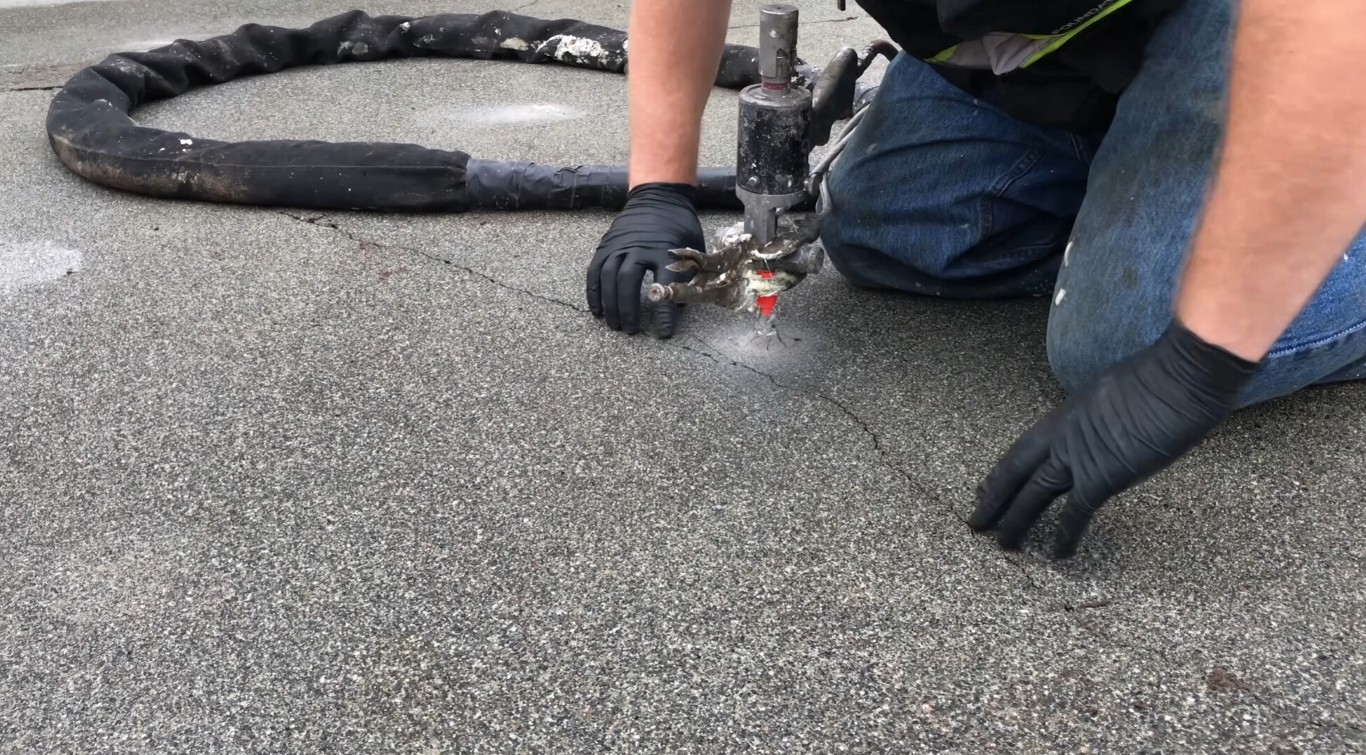
The most common method we use is polyurethane foam injection, sometimes called polyjacking or slab lifting. Here is the basic process so you know exactly what to expect when we show up.
Step 1: Small holes drilled through the slab. We drill a pattern of small holes through the sunken concrete panel, typically about the size of a dime. These are the injection points.
Step 2: Foam injected beneath the slab. Two-part expanding polyurethane foam is injected through the holes. As it expands, it fills any voids in the base, compacts loose soil, and applies upward pressure that lifts the slab evenly.
Step 3: Holes patched and surface cleaned. Once the slab is at the correct elevation, we fill and patch the injection holes. When the work is done, the surface looks nearly the same as it did before, minus the unevenness.
Leveling is not always the right answer. If your slab has crumbled, cracked through in many places, or if the base damage is extensive, replacement may be the better path. In that case, our concrete repair and replacement service covers those situations, and we can also review your concrete driveway options if the affected surface is your driveway.
Concrete Leveling in Garden Grove, CA
We work on leveling jobs for driveways, garage floors, sidewalks, patio slabs, pool decks, and commercial flatwork throughout Garden Grove and the surrounding area. Each job is different, and we take the time to evaluate the actual condition of your slab and base before recommending a solution.
Our team is local, we know the soil conditions in this part of Orange County, and we stand behind our work. If you have a slab that is sinking or sitting uneven, give us a call and we will come take a look.
Common Questions About Concrete Leveling
How long does concrete leveling last?+
Can all sunken slabs be leveled, or are some beyond repair?+
How soon can I use the surface after leveling?+
Have a Sunken or Uneven Slab? We Can Lift It.
Call us for a free look at your concrete. We will tell you whether leveling is the right call or whether another approach makes more sense for your situation.
(657) 722-4198